
 EN
Key Manufacturing Steps Behind Quality Acetate Sunglasses Production
10 critical steps behind premium acetate sunglasses—skip any and durability, fit & finish suffer. See how top suppliers control quality. Get the checklist.
Why the Production Sequence Determines Acetate Quality
Acetate sunglasses look simple on a display stand and are anything but simple to make. The material that gives a frame its colour, depth and warm feel also remembers every shortcut taken during processing. Cut too fast, machined too aggressively or polished too briefly, acetate sunglasses show the consequence in the finished frame.
For a buyer, understanding the sequence is a form of protection. When you know what each step contributes, you can ask sharper questions, recognise a compressed schedule for what it is, and judge whether a factory is genuinely controlling the process or simply moving parts through it. The difference is often a matter of seconds at the drum or degrees at the bench.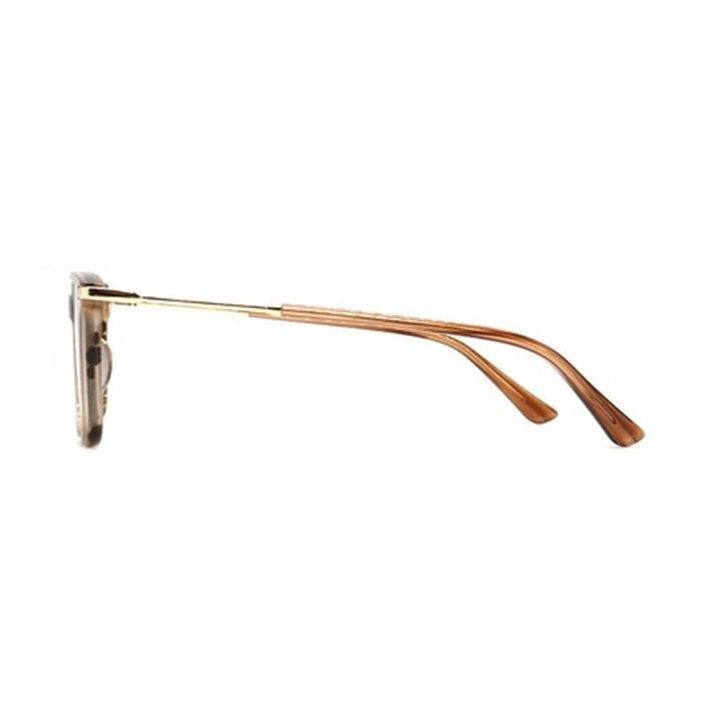
Preparing and Shaping the Material
The earliest stages of acetate sunglasses production decide colour, structure and how much usable material everything else depends on.
Sheet and Block Selection for Acetate Sunglasses
Production starts from either sheets or blocks, and the choice depends on the design. The two forms differ in how they are worked and in the thicknesses available, and either can suit a given part of a frame. Selecting the right form is the first quality decision, because a pattern that reads well across a flat sheet may look cramped inside a thick block.
Selection is also about inspecting the material itself. Sheets are checked for internal flaws, thickness variation and colour consistency before anything is cut. A defect invisible in the stack becomes a visible mark in the finished frame, so rejecting material now is far cheaper than rejecting frames later.
Cutting and Rough Shaping
Once the stock is approved, the frame profile is cut out and roughly shaped. This stage removes the bulk of the waste and establishes the outline that precision machining will refine. Cutting has to allow for the material later stages will remove, so the rough shape is deliberately larger than the finished frame.
Orientation during cutting matters a great deal for pattern. In striped or marbled acetate, the cut determines where the pattern falls on the front and temples, so planning it so the two temples mirror each other is a skill that separates a carefully made pair from an indifferent one. Rough shaping also releases internal stress.
CNC Machining and Profiling Acetate Sunglasses
Precision machining turns the rough piece into a dimensioned frame. Computer-controlled equipment profiles the front and temples to specified thickness, cuts lens grooves and rims, forms the bridge and prepares surfaces for finishing. This is where geometry is set and where tolerance is won or lost across the order.
Feeds and speeds are adjusted to the acetate rather than run at a generic setting. Push the tooling too hard and the material can scorch, chip or develop stress marks that appear only after polishing; run it too slowly and the process becomes uneconomical without improving quality. Recording them is good practice so a later order can repeat the settings.
Surface Finishing and Structural Fitting
Machined acetate has a dull surface and hard edges, and these stages turn it into a product that feels right in the hand.
Tumbling and Polishing Acetate Sunglasses
Tumbling and polishing create the surface a customer actually touches. The process runs in stages, moving from coarse media that removes machining marks to finer media that builds clarity and depth. Each stage has a purpose and a duration, and the sequence matters as much as the individual steps.
Rushing or skipping a stage leaves marks no later polish can hide, and it can produce uneven sheen where some faces are glossy and others remain dull. Because acetate is translucent in many colours, flaws are magnified rather than concealed, so standards are set high from the first drum.
Hand Finishing at the Bench
Machines cannot reach every curve, so hand finishing follows tumbling. Skilled operators refine edges, blend transitions between surfaces and resolve details around the bridge, the endpiece and the temple tips. This is where a frame gains the crispness machinery cannot produce, and where experience shows most clearly.
Hand finishing also dresses the structure. Sharp edges are softened, thickness transitions smoothed, and machining witness marks removed from tight areas. Operators work against the approved sample and the finish standard rather than personal preference, so the result stays consistent from frame to frame across a run.
Hinge Slotting and Fitting
The hinge is the most mechanically stressed part of the frame, and slotting it is a precision job. Slots are cut into temple and endpiece to tight tolerances so the hinge sits flush and the temple folds cleanly.
Fitting also sets hinge tension and alignment, since the temple must open to the correct angle and stay there through repeated use. Metal hinges in acetate require care because the two materials respond differently to stress. Checking function at this stage, before assembly, catches problems while they are still cheap to fix.
Assembly and Verification
Assembly is not simply joining parts, because alignment, fit and balance are all set here.
Temple Assembly and Frame Alignment
Temple assembly joins the temples to the front and adjusts the frame so it sits symmetrically. Alignment covers several things at once: temples folding parallel, opening to matching angles, sitting level on a flat surface and mirroring each other in profile. It is adjusted through careful heat-forming rather than force.
Heat-forming shapes acetate into the correct geometry, and a temple often contains a core wire that holds the adjustment. Temperature control is critical, because too much heat softens the frame out of shape while too little makes the adjustment temporary. Alignment is verified against the specification rather than by eye, since a frame that looks right but measures unevenly wears unevenly.
Lens Fitting and Geometry Checks
Lens fitting is where the eyewear becomes functional. Lenses are edged and fitted to the frame opening in house, and the lens type is specified per programme. Correct fitting means the lens sits securely without stress, the rim closes evenly around it, and the lens surface follows the intended curvature.
For sunglasses, assembly often includes tinted or polarised lenses, and the mark of a good fit is a lens with no distortion and no visible edge stress. Optical checks support the stage, with a lensmeter confirming power and optical centre and a tracer capturing frame shape for edging. Assembled frames are then verified as a whole against the approved sample.
Inspection and Packing
Quality is not a single end-of-line check but a set of checks placed where the process is most likely to drift.
Incoming and In-Process Inspection
Incoming inspection covers acetate sheets and blocks, hinges, core wire, screws and lenses before production begins. Material is checked for thickness, colour, pattern and surface condition, and components for dimensional accuracy and function. Rejecting a bad batch here is among the most cost-effective controls available.
In-process inspection watches key stages while the work is happening. Machining dimensions, hinge function, alignment and surface condition are checked at defined points rather than trusted to luck, which keeps a drifting tolerance from appearing later as an alignment fault with no obvious cause.
Final Inspection and Packing
Final inspection examines finished frames before packing, confirming surface quality, structural integrity, hinge action, lens seating and overall appearance against the standard and the approved sample. Anything that fails is corrected or set aside while correction is still possible.
Packing is the last chance to protect the product. Frames are protected, cases and cloths assembled, and retail-ready packaging prepared so goods arrive as they left the line. That final step is what carries the quality of the sequence all the way to the shelf, which is why the check earns the time it takes.
Frequently Asked Questions
What are the main steps in acetate sunglasses production?
The sequence runs from material to packed product through several stages: sheet and block selection, cutting and rough shaping, precision machining and profiling, then tumbling, polishing and hand finishing. Hinges are slotted and fitted, assembly joins temples and lenses and sets alignment, and the frame is verified, inspected and packed. The order of hinge insertion and polishing varies by model.
Why does acetate need both tumbling and hand finishing?
Tumbling removes machining marks and builds surface clarity across the frame, but it cannot reach every curve, transition and tight corner. Hand finishing refines those areas, softens edges and resolves detailing around the bridge, endpiece and temple tips. Used together they produce a surface that is both uniform and crisp, while either alone leaves witness marks or an uneven sheen.
What happens if a production step is rushed?
Rushed steps leave defects that appear later and cost more to fix. Cutting too quickly can distort the frame through released stress, aggressive machining can scorch or chip the acetate, and shortened polishing leaves marks later stages cannot remove. Skipping alignment checks lets errors reach assembly and multiply, so prevention at each stage is cheaper than correction downstream.



